
The Wheel of the Year is a calendar of eight seasonal festivals that many witches and Pagans celebrate, following the turning of the seasons from the darkest night to the longest day and back again. Each festival is called a sabbat, and together they give your practice a natural rhythm all year long. Here are all eight explained simply, with dates and an easy way to celebrate each one.
- What the Wheel of the Year is
- The eight sabbats and their dates
- One easy practice for each
What is the Wheel of the Year?
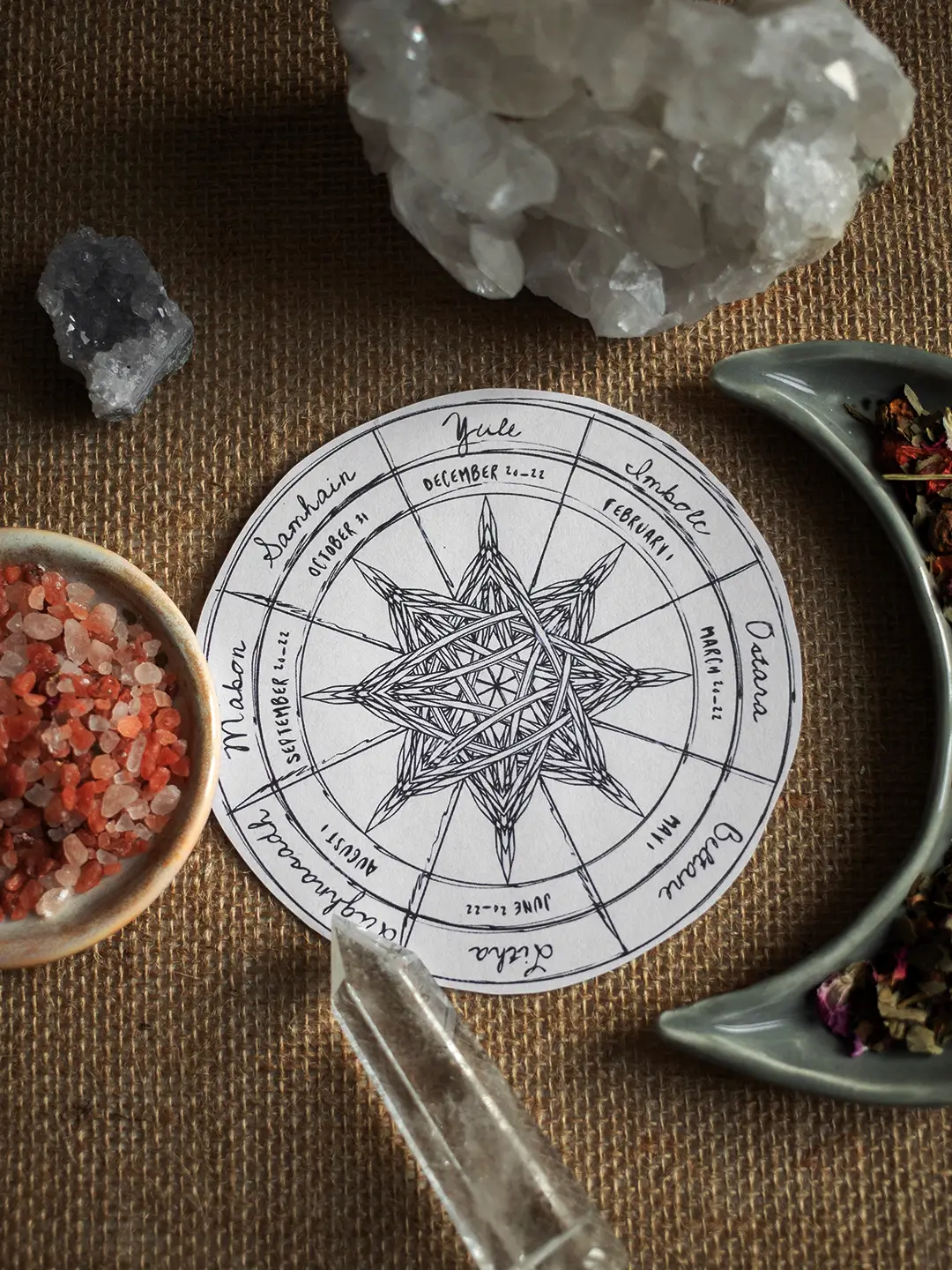
The Wheel of the Year is a cycle of eight festivals spaced roughly six weeks apart. Four of them are solar festivals, the two solstices and two equinoxes, set by the sun’s position. The other four are cross-quarter festivals, falling roughly halfway between them, and they come from older Celtic and Germanic seasonal traditions.
The wheel as we know it today, with all eight festivals together, was put together in modern Paganism and Wicca in the mid-20th century. Some names, like Ostara, Litha and Mabon, were added in the 1970s. The festivals themselves draw on very old seasonal customs, but it’s fair to say the Wheel is a modern way of weaving them together, and that doesn’t make it any less meaningful.
You don’t need to be Wiccan or religious to follow the Wheel. Many witches simply use it as a reminder to slow down, notice the season and match their spells to nature’s energy.
The 8 sabbats of the Wheel of the Year
Oct 31
Samhain
The witch’s new year and the start of the dark half of the year. A time to honor ancestors and reflect.
Try: set a plate for loved ones who have passed.
Read more: our Samhain guide.
Dec 21
Yule
Winter solstice, around December 21. The longest night and the return of the sun.
Try: light a candle at sunset and welcome the light back.
Read more: our guide on how to celebrate Yule.
Feb 1
Imbolc
The first stirrings of spring, linked to the goddess and saint Brigid.
Try: clean your home and light a candle in each window.
Read more: our Imbolc rituals post.
Mar 20
Ostara
Spring equinox, around March 20. Day and night in balance, and nature waking up.
Try: plant seeds or decorate eggs with your wishes.
Read more: our Ostara guide.
May 1
Beltane
Fire, fertility, love and the full bloom of spring.
Try: make a flower crown or jump over a small, safe candle flame for luck.
Jun 21
Litha
Summer solstice, around June 21. The longest day and the sun at its strongest.
Try: gather herbs at midday, when their energy is said to be at its peak.
Aug 1
Lughnasadh or Lammas
The first harvest, especially of grain.
Try: bake bread and share it with gratitude for what you’ve achieved.
Sep 22
Mabon
Autumn equinox, around September 22–23. The second harvest, balance and thanks.
Try: write a gratitude list and enjoy apples or a seasonal meal.
Celebrate on the nearest weekend if the exact day doesn’t work. The season’s energy lasts for days around each sabbat, not just a few hours.
Wheel of the Year dates for 2026–2027
The four solar sabbats change slightly each year, because they follow the exact moment of a solstice or equinox. These are the next dates, for the Northern Hemisphere:
- Yule: December 21, 2026, at 3:50 p.m. EST (9:50 p.m. CET)
- Imbolc: February 1, 2027
- Ostara: March 20, 2027, at 4:24 p.m. EDT (9:24 p.m. CET)
- Beltane: May 1, 2027
- Litha: June 21, 2027, at 10:10 a.m. EDT (4:10 p.m. CEST)
- Lughnasadh: August 1, 2027
- Mabon: September 23, 2027, at 2:01 a.m. EDT (8:01 a.m. CEST), which is still the evening of September 22 on the US West Coast
- Samhain: October 31, 2027
Solstice and equinox times are from timeanddate.com’s seasons calendar. Many witches celebrate fixed festivals like Samhain starting the evening before, since Celtic days traditionally began at sunset.
The Wheel of the Year in the Southern Hemisphere
If you live in Australia, New Zealand, South Africa or South America, your seasons are reversed, so most witches turn the wheel around. Here’s how it shifts:
- Samhain: around April 30 to May 1
- Yule: around June 21
- Imbolc: around August 1
- Ostara: around September 22–23
- Beltane: around October 31 to November 1
- Litha: around December 21
- Lughnasadh: around February 1
- Mabon: around March 20
Some Southern Hemisphere witches keep the Northern dates for tradition, but following your own seasons usually feels more natural.
How to start celebrating the sabbats
Start small. Pick the next sabbat on the calendar and do something simple: a seasonal meal, a walk to notice what’s changing in nature, try a simple candle spell, or rearrange your altar. Write down what you did and how it felt in your Book of Shadows.
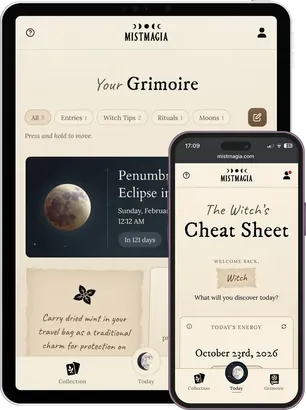
Over a full year, you’ll build your own traditions, and the Wheel will start to feel like home. The Witch’s Cheat Sheet gives you daily guidance and the meanings of seasonal herbs and colors, which makes it easier to plan each celebration.
Find what you need for your next spell — in seconds.
Your digital witchcraft guide, ready whenever you need it.
- Discover what your herbs, crystals and ingredients can do
- Know every moon phase before it arrives
- Start each day with guidance, affirmations and mini rituals
- Keep your favorites, notes and pictures in your own Grimoire
Lifetime access. No subscription.
14-day money-back guarantee.